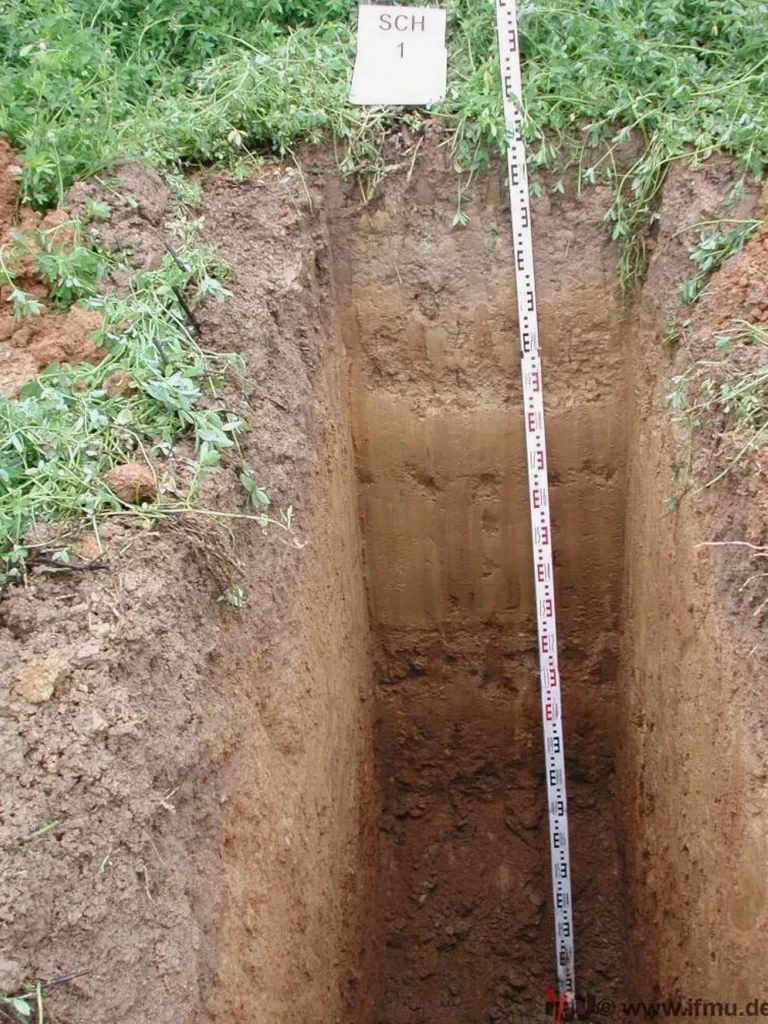
In Salt Lake City, the difference between a straightforward excavation and a costly delay often comes down to what you find two feet below the surface. We've opened test pits on the east bench where Lake Bonneville gravels sit just under thin topsoil, and on the west side where fat clays from the old lakebed extend six meters deep. An exploratory test pit gives us direct visual access to the stratigraphy — no extrapolating from a 2-inch split spoon sample. We log the sequence, measure in-situ density with a sand cone density test right at the wall, and pull bulk samples for grain-size analysis back at the lab. When the IBC requires a 3-foot bearing inspection or you suspect undocumented fill from the 1980s construction boom near Sugar House, there is no substitute for putting a geologist in the hole.
A single exploratory test pit on a Salt Lake City lot can reveal whether you are building on undisturbed Lake Bonneville sediments or on compacted fill from the 1960s — and that changes the foundation design entirely.
Service characteristics in Salt Lake City
Risks and considerations in Salt Lake City
Comparing a site in the Avenues to one in the industrial corridor near 2100 South illustrates the risk spread. The Avenues sit on older Lake Bonneville terraces with dense gravels and sands — good bearing, fast drainage, low collapse potential. Three miles west, the soil profile shifts to deep, compressible silty clays that can consolidate unevenly under a mat foundation. The real liability is undocumented fill. We have uncovered construction debris, old foundations, and organic layers in areas that looked level and clean from the surface. An exploratory test pit is the cheapest insurance against a foundation redesign mid-project. Skipping it means you are betting the structural budget on a soil profile nobody has actually seen. In Salt Lake City's liquefaction-prone zones near the Jordan River, that bet can go wrong fast.
Our services
Our exploratory test pit work in Salt Lake City is designed to feed directly into the geotechnical report your structural engineer needs. Each pit produces a field log, a photo set, and the lab data required to assign a bearing capacity value under IBC Section 1806.
Stratigraphic Logging & Sampling
We clean the pit face, identify each stratum by USCS symbol, and collect bulk or block samples for index testing and strength determination.
In-Situ Density Verification
Using sand cone or drive cylinder methods at the pit floor, we measure compaction levels for fill acceptance or bearing capacity calculations.
Bearing Capacity Inspection
The IBC-required visual inspection at footing grade: we confirm the bearing stratum matches the design assumptions and is free of soft spots or organic lenses.
Fill & Anomaly Mapping
When we hit trash, ash, or buried topsoil, we extend the pit or add offsets to map the lateral extent of the fill — critical for sites east of I-15 where old orchards were leveled.
Common questions
At what depth does OSHA require shoring or benching for an exploratory test pit in Utah?
OSHA 1926 Subpart P applies. In Utah, pits deeper than 5 feet require a protective system unless the excavation is in stable rock. For Type C soils — common in Salt Lake Valley clays — the maximum allowable simple slope is 1.5 horizontal to 1 vertical. We classify the soil at the start of each job and design the pit accordingly.
How long does it take to excavate and log one exploratory test pit?
A typical 10-foot-deep pit takes about 2 to 3 hours of field time. That includes mechanical excavation, hand-trimming the log face, in-situ density testing, sampling, and photography. We can usually complete two pits in a single mobilization day if they are on the same parcel.
What does an exploratory test pit cost in the Salt Lake City area?
Most residential and light commercial test pits run between US$500 and US$950 per pit. The final figure depends on depth, access constraints, and whether we need a long-reach excavator or special traffic control for sites on busy streets like State Street or 700 East.
Can you collect undisturbed samples from an exploratory test pit?
Yes, for cohesive soils. We carve block samples by hand or push thin-wall Shelby tubes into the pit floor. These samples go to the lab for triaxial or consolidation testing without the disturbance that split spoon sampling introduces.
Do you need a permit to open a test pit on private property in Salt Lake City?
Generally no permit is required for a temporary excavation that is backfilled the same day. However, if the pit exposes the water table or is within a public utility easement, we coordinate with Salt Lake City Public Utilities and Blue Stakes of Utah for utility locating before breaking ground.