The International Building Code (IBC 2024) and ASCE 7-22 Minimum Design Loads set the framework for shallow foundation design in Salt Lake City, but the unique lacustrine deposits of the ancient Lake Bonneville demand a localized geotechnical approach. The city sits at approximately 4,265 feet above sea level within the Salt Lake Valley, underlain by complex sequences of soft clays, silts, and sands deposited over millennia. Designing a footing or mat foundation here requires reconciling bearing capacity theory with the volume change potential of local cohesive soils, which are sensitive to the semi-arid climate and irrigation cycles. A plate load test is often specified to calibrate allowable bearing pressures in heterogeneous fill zones near the Jordan River corridor, while correlation with subsurface exploration reduces the risk of mischaracterizing the target bearing stratum.
The legacy of Lake Bonneville sediments demands that every shallow foundation design in Salt Lake City explicitly consider the seasonal shrink-swell potential of the clay fraction.
Service characteristics in Salt Lake City
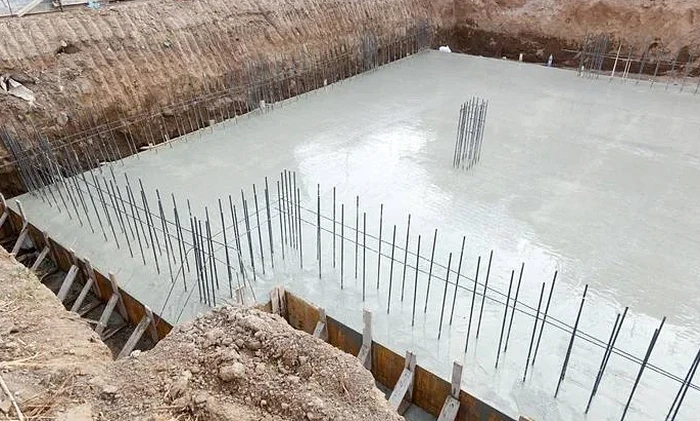
Risks and considerations in Salt Lake City
In Salt Lake City, we frequently observe that designers underestimate the long-term differential settlement caused by post-construction soil desiccation near building perimeters. The combination of high-plasticity clay and the city's average annual precipitation of just 16 inches, concentrated in winter and spring, creates a moisture deficit under the central footprint that persists year-round. Foundation perimeter treatments, deepened edge beams, and consistent site drainage are not merely recommendations but essential countermeasures against the edge-lifting phenomenon. Another recurrent issue is the assumption of a uniform bearing stratum: the laminated nature of the Lake Bonneville deposits means a thin, apparently dense sand layer can overlie a normally consolidated clay of much lower strength, a condition that must be verified through a detailed CPT test to avoid a bearing capacity failure triggered by punching through the crust.
Our services
Our shallow foundation design scope for projects in Salt Lake City integrates site-specific geotechnical investigation with structural loading analysis to deliver code-compliant bearing values and settlement predictions. Each design package is prepared under the supervision of a licensed professional engineer and is calibrated to the unique stratigraphy of the Salt Lake Valley.
Bearing Capacity and Settlement Analysis
We compute net allowable bearing pressure using Vesic and Terzaghi-Meyerhof formulations modified for the fine-grained Lake Bonneville soils, incorporating both short-term undrained and long-term drained conditions per IBC 2024. Settlement is analyzed using Hough's method for granular layers and consolidation parameters from ASTM D2435 for cohesive strata, targeting differential movement thresholds that protect the superstructure.
Frost-Protected and Seismic Foundation Design
We develop frost-protected shallow foundation details that meet the 30-inch embedment requirement without unnecessarily deep excavations, and we apply ASCE 7-22 seismic provisions to assess bearing capacity degradation under cyclic loading. For sites near the Wasatch fault traces, we evaluate the potential for reduction in bearing strength due to pore pressure build-up, ensuring the foundation remains stable during the design-level earthquake.
Common questions
What is the typical cost of a shallow foundation design package for a residential project in Salt Lake City?
The engineering fee for a shallow foundation design on a typical single-family residential lot in the Salt Lake Valley generally falls between US$1,650 and US$3,470. The exact cost depends on the project's structural complexity, the number of borings required to satisfy IBC Chapter 18, and whether specialized laboratory testing such as triaxial or consolidation is needed to characterize the Lake Bonneville clays.
How does the Lake Bonneville geology affect the allowable bearing pressure for footings?
The Lake Bonneville sediments are highly stratified and can transition from stiff clays to loose silts within a vertical foot. This variability means that presumptive bearing values from the IBC table are not reliable; site-specific borings are required. The design must also account for the sensitivity of these clays to moisture, which can reduce undrained shear strength significantly if the site drainage is poor or if extensive irrigation is planned.
What is the minimum footing depth required by code in Salt Lake City?
The IBC 2024 requires exterior footings to be placed at a minimum depth of 30 inches below finished grade in Salt Lake County to protect against frost heave. However, this is a minimum; the actual depth must also extend through any undocumented fill or organic topsoil to reach competent native material, which in some parts of the valley near the Jordan River may require a deeper excavation.