The valley floor beneath Salt Lake City sits on a deep sequence of soft, fine-grained Lake Bonneville sediments—silts, lean clays, and interbedded sands that lose strength fast under cyclic loading. With a high seismic hazard classification per ASCE 7 and a shallow groundwater table that rarely drops below 4 to 6 feet in the lower avenues, ground improvement isn't optional for mid-rise and critical structures. Stone column design here has to solve two problems at once: densify the granular matrix to cut liquefaction risk and provide a stiff, drained load path through the compressible upper crust. When we drill SPT borings along the Wasatch Front, blow counts under 6 in the upper 15 feet are common, which pushes the design toward tightly spaced, partially penetrating columns unless bedrock or dense gravel is reachable within 30 feet. Understanding that stratigraphy up front—often by pairing stone column layouts with CPT testing—is what keeps the installation parameters realistic and the QA/QC verifiable before the first vibroflot hits the ground.
A stone column design that ignores the Lake Bonneville clay sensitivity will underestimate settlement by 30-60%—liquefaction triggering isn't the only failure mode here.
Service characteristics in Salt Lake City
- Column diameter tolerance ±2 inches measured at the top of the gravel plug
- Backfill consumption logged per 1-foot lift versus theoretical volume
- Amperage and withdrawal rate records from the vibroflot data logger
- Post-treatment CPT or SPT verification within 48 hours of column completion
- Load test program on a minimum of 2% of columns when bearing capacity governs
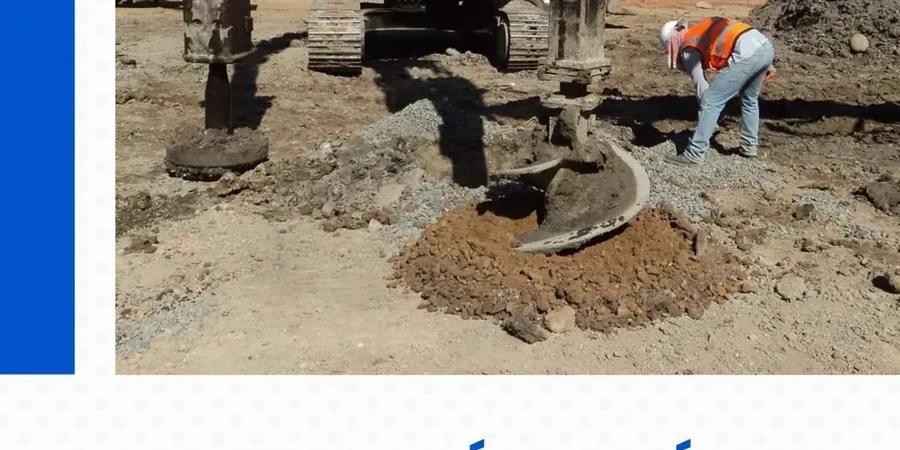
Risks and considerations in Salt Lake City
The dry-basin climate and the spring snowmelt cycle create a split risk profile for stone column installations in Salt Lake City. August through October, the water table drops to its lowest point, and the unsaturated crust can add 2 to 3 feet of false strength that disappears the moment irrigation or runoff saturates the ground. Designing from summer SPT data without correcting for seasonal moisture can overpredict the pre-treatment bearing capacity and undersize the column grid. The opposite problem hits in April and May: high groundwater combined with loose, saturated silts makes hole stability tricky during vibro-replacement, and the risk of necking or contamination rises if the withdrawal rate isn't slowed and the gravel feed kept pressurized. We've also seen sulfate concentrations above 0.3% in the Lake Bonneville deposits east of I-15, which forces a chemical compatibility check on the aggregate and any grout collar when columns are combined with a load transfer platform. Missing that step has led to premature aggregate degradation on two projects we reviewed post-construction.
Our services
The stone column scope we handle in Salt Lake City covers the full sequence from design validation through installation QA, because half the value is catching the subsoil surprises before the vibroflot fleet arrives.
Pre-design ground investigation
We run SPT borings and CPT soundings on the actual building footprint to map layer boundaries, groundwater level, and fines content—the three variables that control column spacing and depth. Lab testing on undisturbed Shelby tube samples gives us the consolidation parameters and cyclic strength for the settlement and liquefaction analyses.
Stone column design and specification
Design output includes the column grid geometry, diameter, depth, aggregate spec, installation sequence, and acceptance criteria. We use Priebe's method and plane-strain finite element models calibrated to site-specific SPT/CPT data, always cross-checked against empirical case histories from the Salt Lake basin.
Installation monitoring and verification
Full-time field oversight during vibro-replacement: we log amperage, lift thickness, gravel consumption per column, and withdrawal rate in real time. Post-installation, we execute the verification plan—usually a mix of CPT soundings and SPT borings at offset locations—and sign off on the improvement ratio before structural concrete goes in.
Common questions
How much does stone column design and testing cost for a typical commercial lot in Salt Lake City?
For a standard commercial building pad under 10,000 square feet, the combined design package—covering the pre-design investigation, engineering analysis, and QA/QC during installation—generally falls between US$1,400 and US$4,770. The spread depends on how many borings and CPT soundings are needed, the depth of the soft zone, and whether cyclic lab testing is required for the liquefaction assessment.
How deep do stone columns typically need to go in the Salt Lake Valley?
Most designs target 20 to 35 feet to reach either the natural dense gravel layer at the base of the Lake Bonneville sequence or a competent stratum with SPT N60 above 20. In the downtown and airport areas, where the soft clays extend deeper, partially penetrating columns are sometimes used with a careful check on the residual settlement under the floating column group.
What verification testing do you perform after stone column installation?
We run SPT borings or CPT soundings at offset locations between columns, usually 24 to 72 hours after installation. The measured N60 or tip resistance is compared against the design target for the treated zone. On bearing-critical projects, we also perform zone load tests on a sample of columns to confirm the modulus of the improved ground.
Can stone columns be installed with the high groundwater table we have in parts of the city?
Yes—the vibro-replacement process actually works well under a high water table because the water helps stabilize the hole during aggregate placement, as long as the fines content of the native soil is below about 20%. When the silt fraction is higher, we adjust the installation sequence and may add a bottom-feed system to keep the gravel column clean.