The foundation challenges between the Avenues and the Glendale neighborhood couldn't be more different. Up near the foothills, we often encounter shallow bedrock and coarse colluvial deposits that handle loads well, while the soils closer to the Jordan River contain compressible silts and clays deposited by ancient Lake Bonneville, demanding a completely different structural approach. A stiffened mat foundation becomes the logical choice when point loads from a steel frame or shear walls need to be distributed across a broader footprint to keep total and differential settlements within tolerable limits. We have designed these integrated slabs for projects from the Marmalade District to Sugar House, where the interplay between seasonal moisture changes in the expansive clays of the Lake Bonneville bed and structural stiffness is the primary design driver. A thorough CPT test before finalizing the mat thickness helps us map exactly where the transition between competent granular layers and soft lacustrine sediments occurs, data that directly feeds the subgrade reaction modulus used in our finite element models.
A properly designed mat foundation in Salt Lake City isn't just a slab—it's a structural diaphragm that bridges the soil variability left by Lake Bonneville's ancient shoreline.
Service characteristics in Salt Lake City
Demonstration video
Risks and considerations in Salt Lake City
A mistake we see repeated too often is a contractor ordering a mat foundation designed with a uniform 2,000 psf bearing pressure assumption for a site near the Jordan River, only to find the borings reveal 15 feet of soft, normally consolidated clay that can barely handle 800 psf without long-term settlement. The result is a slab that gradually settles unevenly, cracking partition walls and jamming doors within the first two years of occupancy. The real danger is differential movement: one corner of the mat sitting on a sand lens settles 0.25 inches while the opposite corner, underlain by saturated clay, settles 2 inches over a decade. That angular distortion tears through shear walls. We mitigate this by analyzing the mat as a flexible plate on an elastic half-space, defining zones of varying subgrade reaction modulus across the footprint—a technique that becomes essential in the transition zones where the Lake Bonneville shoreline terraces step down toward the valley floor. Our slope stability analysis also comes into play when the mat is near a descending grade or a daylighted basement wall on the east bench.
Our services
Our mat foundation design package in the Salt Lake City area is structured to move from subsurface characterization through structural analysis to constructability review, ensuring the slab performs under both static and seismic conditions.
Geotechnical Investigation for Mat Design
A targeted drilling and CPT program to define the stratigraphy, strength, and consolidation characteristics of the Lake Bonneville sediments beneath your site, providing the soil parameters needed for mat analysis.
Structural Mat Analysis & Detailing
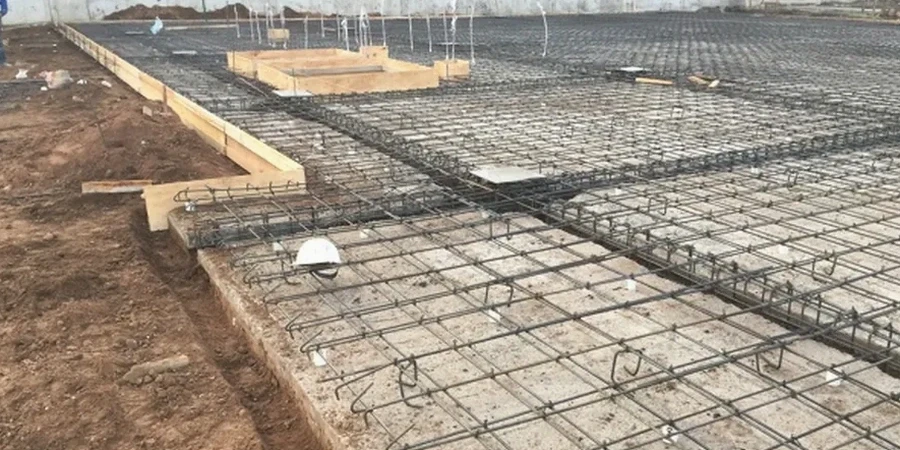
Finite element modeling of the mat as a plate on elastic foundation, including punching shear checks at columns, ribbed mat optimization, and reinforcement detailing compliant with ACI 318.
Construction-Phase QA/QC
Subgrade inspection and proof rolling verification before the vapor barrier and rebar placement, plus concrete maturity monitoring to control thermal cracking risk during the pour.
Common questions
When is a mat foundation more cost-effective than individual footings in Salt Lake City?
A mat becomes the economical choice when the required footing area exceeds about half the building footprint, which happens frequently in the softer clays of the Glendale and Rose Park areas where allowable bearing pressures drop below 1,500 psf. The cost of a raft/mat foundation design in Salt Lake City typically ranges from US$1,110 to US$3,780 for the engineering analysis, depending on the complexity of the soil profile and the number of load cases analyzed.
How does the Lake Bonneville geology affect mat foundation design here?
The ancient lake left a sequence of sediments that transitions from sands and gravels near the shoreline terraces to deep, soft clays in the central valley. This means the compressibility of the soil can change dramatically within a single building footprint. We model the mat using a variable subgrade reaction modulus to account for this, avoiding the assumption of uniform bearing that fails in these conditions.
What seismic provisions apply to mat foundations in Salt Lake County?
Most of Salt Lake City falls under Seismic Design Category D per ASCE 7-22, which requires the mat to be designed for the overturning and base shear demands from the superstructure. We incorporate the seismic soil pressure distribution as specified in ASCE 7 Chapter 19, and often specify a thickened edge or grade beam to tie the mat to the lateral force-resisting system.
How do you handle the expansive clay risk in a mat foundation?
The Lake Bonneville clays can exhibit moderate expansion potential with seasonal moisture changes. We typically recommend a moisture-conditioned subgrade, a capillary break layer of clean granular material, and a vapor barrier placed directly beneath the mat. In some cases, we design the mat as a structurally stiffened slab with additional top reinforcement to resist the edge-lift and center-lift deformation patterns caused by expansive soil heave.
What is the typical turnaround time for a mat foundation design package?
Once the geotechnical investigation is complete, a standard mat foundation design for a commercial or mid-rise residential building in Salt Lake City takes between two and three weeks. This includes the finite element analysis, reinforcement detailing, and coordination with the structural engineer of record for column reactions and load combinations.