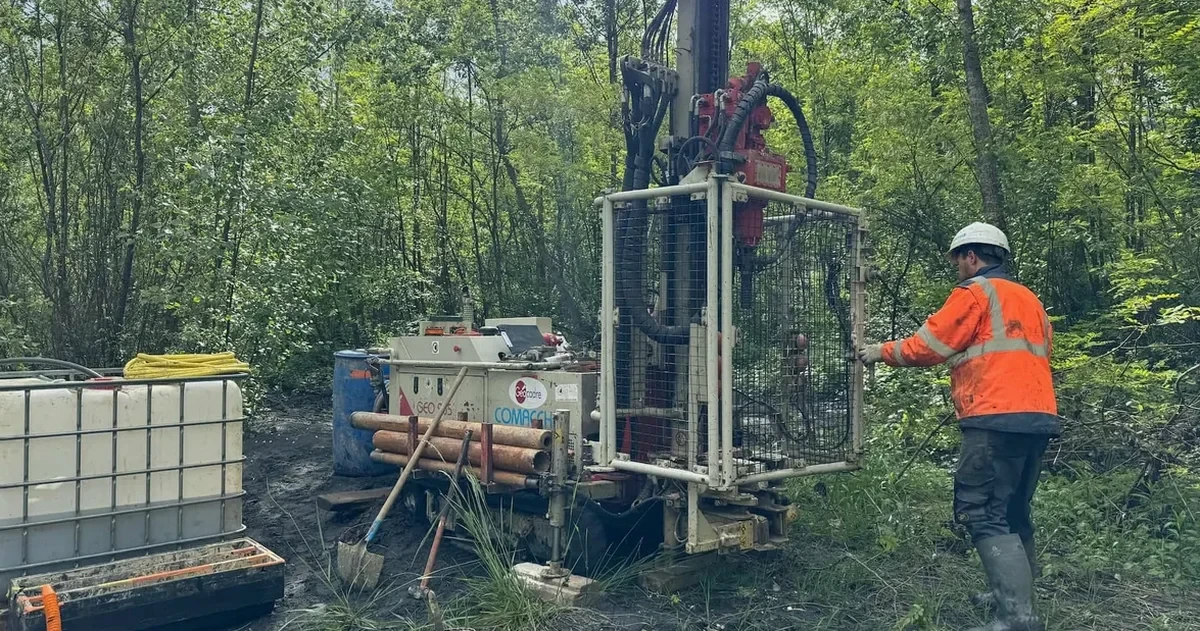
We see it repeatedly across Salt Lake City: a contractor breaks ground near the Jordan River or along the Wasatch bench, only to hit compressible lakebed clays that turn a six-month project into a two-year dispute over differential settlement. The Salt Lake Valley sits on ancient Lake Bonneville sediments—layers of soft, saturated silts and clays that behave unpredictably under load unless you have a rigorous soil mechanics study guiding your foundation design. Many builders in the valley still rely on generic presumptive bearing values, but the International Building Code and ASCE 7 require site-specific data when you’re dealing with the kind of interbedded stratigraphy we have here. A proper investigation, often starting with SPT drilling to sample the subsurface, gives you the strength parameters, consolidation potential, and seismic site class that structural engineers actually need—and it keeps your project schedule from unraveling once excavation starts.
Salt Lake City’s Lake Bonneville clays can lose over half their bearing capacity when saturated—a condition that standard presumptive codes miss entirely.
Service characteristics in Salt Lake City
Risks and considerations in Salt Lake City
A practical observation from dozens of projects along State Street and west of I-15: many existing geotechnical reports underpredict settlement because they assume drained conditions when the water table sits barely five feet down in spring. The Bonneville clays under much of downtown Salt Lake City are overconsolidated near the surface but normally consolidated below about 15 feet, meaning secondary compression can continue for years after construction if the preconsolidation pressure is underestimated. Designers who skip a thorough soil mechanics study risk specifying footings that tilt, slabs that crack along predictable grid lines, and retaining walls that rotate outward as the backfill consolidates the underlying clay. In the Sugar House and Liberty Wells neighborhoods, where older structures sit on shallow spread footings, adjacent new construction can induce settlement damage if the excavation doesn’t account for the stress bulb overlap—something only a detailed stress-strain analysis from your lab data can prevent.
Our services
Our soil mechanics work in Salt Lake City supports every phase of your project, from due diligence through foundation design and value engineering. We don’t just hand you a binder of lab reports—we deliver actionable parameters that your structural engineer can plug directly into their analysis.
Foundation Design Parameter Reports
We provide net allowable bearing pressure, modulus of subgrade reaction, and settlement estimates calibrated to the actual stratigraphy at your Salt Lake City site—not generic textbook values that ignore the Bonneville lakebed complexity.
Seismic Site Classification & Liquefaction Screening
Using shear wave velocity profiles and SPT data, we determine your site class per ASCE 7-22 and screen for liquefaction triggering in the saturated sands that underlie much of the valley west of the fault.
Slope Stability & Excavation Support Analysis
For projects on the benches or along I-80, we evaluate cut slope stability and recommend temporary shoring requirements based on effective stress parameters from triaxial testing of local colluvium.
Consolidation & Settlement Analysis
We run incremental oedometer tests to measure compression index (Cc) and recompression index (Cr), then model time-rate settlement so you know whether your floor slabs need to be designed for post-construction movement over the next decade.
Common questions
What does a soil mechanics study cost for a typical commercial lot in Salt Lake City?
For a standard commercial parcel under one acre, with two to three borings to 30–50 feet plus laboratory testing and a design-parameter report, budgets typically fall between US$2,700 and US$5,480. The spread depends on access constraints, depth to refusal, and how many consolidation or triaxial tests the project requires.
How long does it take to get results from a soil mechanics study here?
Field drilling usually wraps up in one to two days. Laboratory testing—particularly consolidation tests that need to run through primary compression—adds about ten to fourteen business days. Most Salt Lake City projects receive the final geotechnical report within three weeks from mobilization.
Do I really need a soil mechanics study if my site is next to a project that already had one?
The Bonneville lakebed sediments change character over very short distances in the Salt Lake Valley. We’ve seen two lots separated by 150 feet have completely different consolidation potential because one sits over an old channel fill. IBC explicitly requires site-specific investigation, and lenders and structural engineers here won’t sign off on borrowed data.